
OSGOOD – SCHLATTERS DISEASE (KNEE PAIN)
WHAT IS OSGOOD-SCHLATTERS DISEASE?
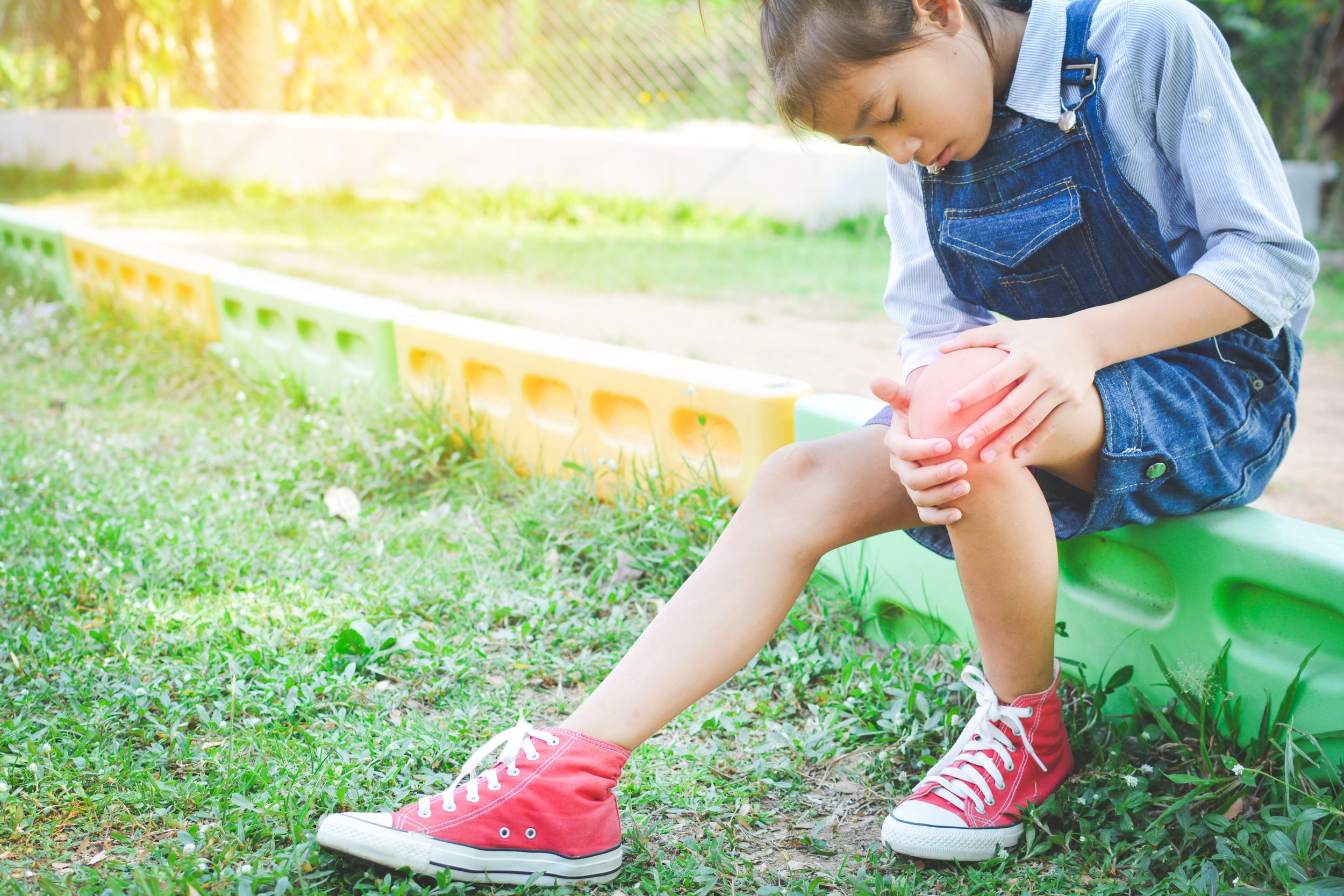
Osgood Schalters is a growth disorder causing extreme pain in the front of the knee. Children will complain their knees are painful when an increase in sport occurs.
The muscle attachment just under the knee will pull and cause the area to become painful to touch and inflamed with a lump just below the kneecap. This is due to the inflammation of the growth plate (apophysis) at the top of the leg bone (tibial tubercle), where the patella tendon inserts.
It is commonly seen in boys and girls between the ages of 9-16
as the bones grow from the growth plates. The growth plate is
made up of cartilage cells, which are softer and more vulnerable to injury than mature bone.
CAUSES
Strong repetitive quadriceps contractions are thought to cause a traction force on the tibial tuberosity, disrupting the immature bone.
Adolescent growth spurt.
Overuse in sports involving jumping and running.
TREATMENT
The condition usually resolves on its own, once the child’s bones stop growing. Treatment is usually aimed at relieving discomfort including:
Reduction or modification of activities
- Taping
- Ice
- Stretching
ALWAYS CONSULT A TRAINED PROFESSIONAL
The information in this resource is general in nature and is only intended to provide a summary of the subject matter covered. It is not a substitute for medical advice and you should always consult a trained professional practising in the area of medicine in relation to any injury or condition. You use or rely on information in this resource at your own risk and no party involved in the production of this resource accepts any responsibility for the information contained within it or your use of that information.