
TOE WALKING
WHAT IS TOE WALKING?
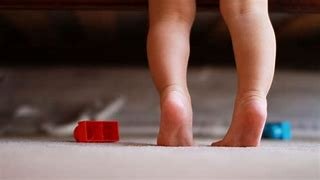
Toe walking (equinus gait) refers to a gait pattern where a child walks on their toes or balls of feet, without putting much if any weight through the heel or any other part of the foot.
Toe walking in toddlers is common under the age of 3, if they are just beginning to learn how to walk and if everything else is normal.
Most cases are just a habit and the child will outgrow it, however, if a child continues to toe walk they should be assessed by a podiatrist as it can be a sign of a condition that needs further investigation (especially if the ankle joint range of motion is limited).
CAUSES
- Habitual – where the cause is unknown but the child is physically able to stand flat footed, they just prefer to walk on their toes.
- Congenitally short or contracted Achilles Tendon
- Neuromuscular conditions (i.e. Cerebral Palsy, muscular dystrophy, leg length differences, spinal cord abnormalities).
- Autism – there is a link between toe walking and autism. Further assessment is indicated (if this is suspected).
- Hypersensitivity or sensory complications
TREATMENT
All cases of toe walking should be evaluated to rule out the causes other than just habit. If the toe walking is more severe or persistent, then treatment consideration may be given to:
Stretching and Massage Botox injections Casting or Night Splints Surgery
ALWAYS CONSULT A TRAINED PROFESSIONAL
The information in this resource is general in nature and is only intended to provide a summary of the subject matter covered. It is not a substitute for medical advice and you should always consult a trained professional practising in the area of medicine in relation to any injury or condition. You use or rely on information in this resource at your own risk and no party involved in the production of this resource accepts any responsibility for the information contained within it or your use of that information.